
When patients pick up their CPAP machine from North Cair Medical Supplies in Parksville, they always have questions. After 22 years of helping Vancouver Island patients with respiratory care, our Registered Respiratory Therapists Dan Stockton and Shea Alain have heard them all. Here are the most common ones, answered honestly.
“How Long Do I Have to Use My CPAP?”
For most patients with moderate to severe obstructive sleep apnea, CPAP is a long-term treatment. The Canadian Thoracic Society recommends ongoing CPAP therapy because obstructive sleep apnea is a chronic condition. Stopping therapy means the airway obstruction returns, usually the same night. For anyone not yet tested, sleep apnea testing in Parksville is available without a referral.
That said, some patients can reduce or eliminate their need for CPAP through significant weight loss, surgery, or positional therapy. Your physician can reassess your sleep apnea periodically.
The patients we see in Parksville who do best are the ones who accept CPAP as part of their routine, like brushing their teeth.
“How Do I Clean My CPAP Machine?”
Daily cleaning takes less than five minutes:
- Wipe your mask cushion with a damp cloth and mild soap every morning
- Empty and rinse your water chamber daily
- Let everything air dry on a clean towel
Weekly cleaning:
- Disassemble your mask completely and wash all parts in warm soapy water
- Wash the water chamber with vinegar and water (1 part vinegar, 3 parts water)
- Wash the tubing by running soapy water through it, then hang to dry
The American Academy of Sleep Medicine recommends against UV sanitizers and ozone cleaners, as they can damage mask materials and have not been proven more effective than regular soap and water.
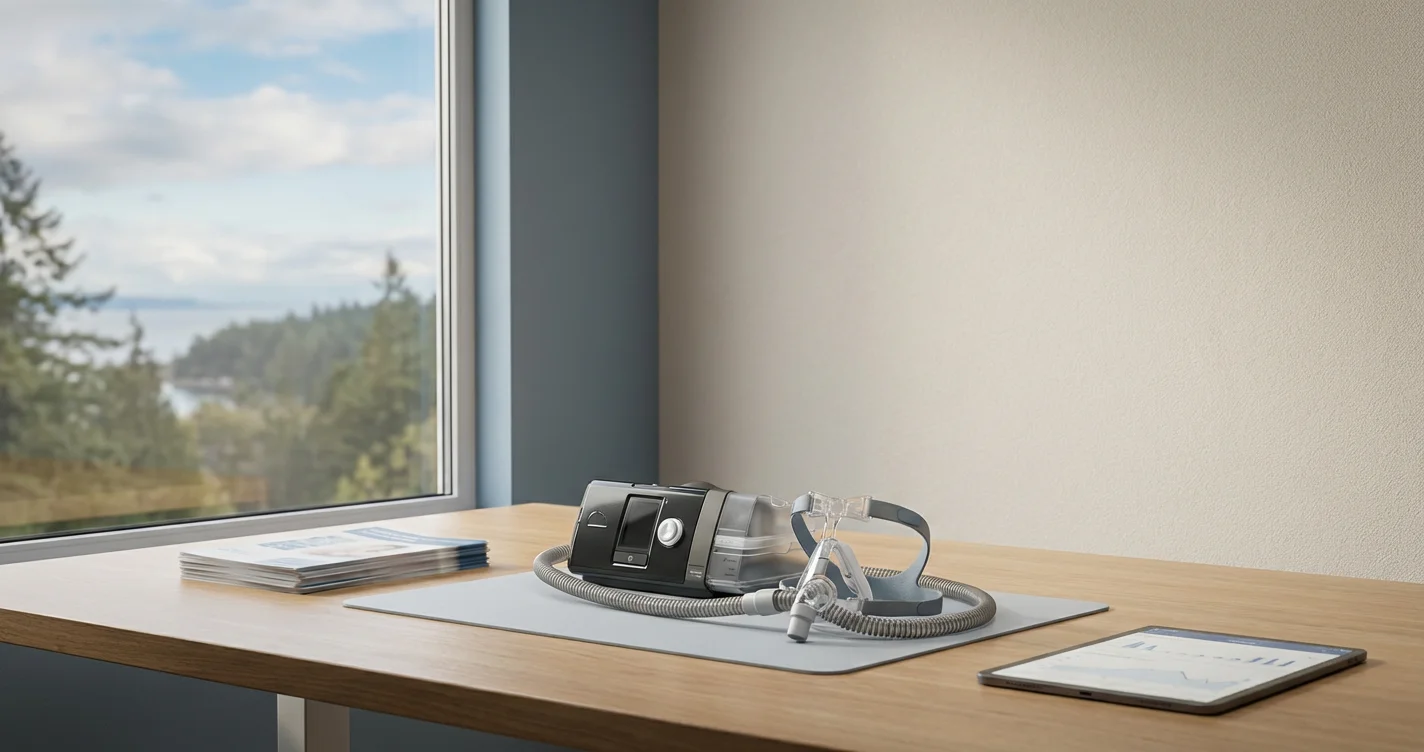
“Can I Travel with My CPAP?”
Absolutely. This is one of the most common questions from our Parksville patients, many of whom travel to visit family on the mainland or take trips off Vancouver Island.
Flying: CPAP machines are classified as medical devices by CATSA and TSA. They do not count toward your carry-on limit. Keep your machine in your carry-on, never in checked luggage.
Camping on Vancouver Island: Battery packs designed for CPAP machines last one to two nights per charge. Popular for trips to Rathtrevor Beach Provincial Park, the Gulf Islands, or backcountry sites.
International travel: Most modern machines accept 100-240V power automatically. You only need a plug adapter, not a voltage converter.
We carry travel CPAP machines and battery packs at our Parksville location.
“Is My CPAP Covered by Insurance in BC?”
CPAP coverage in British Columbia depends on your insurance plan:
MSP (BC Medical Services Plan): Does not cover CPAP machines or supplies. This is a common misconception.
Extended health benefits: Most employer-sponsored extended health plans cover a portion of CPAP costs. Coverage varies: some cover 80% of the machine, others have annual caps on supplies. Check with your HR department or insurance provider.
BC income or disability assistance: The Ministry of Social Development and Poverty Reduction may fund a CPAP for people who meet its medical criteria. (BC PharmaCare does not cover CPAP.)
Veterans Affairs: Covers CPAP for eligible veterans.
North Cair provides detailed invoices with the proper medical device codes so you can submit claims directly to your insurance. We can also process direct billing for some plans. Ask us about your specific coverage when you visit our Parksville clinic.
“What If I Cannot Sleep with My CPAP?”
This is more common than you might think, and it does not mean CPAP is not for you. Most patients who struggle initially succeed with adjustments.
Try the ramp feature. Most machines can start at a very low pressure and gradually increase over 20 to 30 minutes as you fall asleep. This makes the initial sensation less overwhelming.
Try a different mask. Many patients who struggle with a full face mask do much better with nasal pillows, and vice versa. Come to North Cair for a free mask consultation if your current mask is not working.
Address nasal congestion. If your nose is blocked, CPAP becomes much harder. Saline rinses, nasal steroid sprays (talk to your doctor), and increasing your humidifier setting can all help. Vancouver Island’s damp climate is generally kind to nasal passages, but indoor heating in winter dries things out.
Give it time. The AASM recommends committing to at least four to six weeks of consistent use before concluding that CPAP is not working. Our respiratory therapists are available for check-ins throughout this period.
“How Often Do I Replace CPAP Parts?”
CPAP components wear out and need regular replacement:
|
|
|
|
|
|
|
|
|
|
|
|
|
|
|
|
|
|
|
|
|
|
|
|
We stock all standard replacement parts at our Parksville location. Many of our Vancouver Island patients set up standing orders so supplies arrive before parts wear out.
“Does CPAP Have Side Effects?”
CPAP is generally very safe, but some patients experience minor side effects:
Dry mouth: Increase humidifier settings or switch to a full face mask. Very common in the first few weeks.
Nasal congestion: Your body is adjusting to the airflow. Heated humidification and saline rinses help.
Bloating (aerophagia): Swallowing air during sleep. Lowering your pressure or adjusting your sleep position can reduce this. Talk to your respiratory therapist.
Skin marks from the mask: Should fade within an hour of removing the mask. If they persist or develop into sores, your mask fit needs adjusting.
None of these side effects are dangerous, and all of them are manageable with proper support from your respiratory care team.
FAQ
Can I stop using my CPAP if I lose weight? Possibly. Weight loss can reduce sleep apnea severity, but many patients still need CPAP even after significant weight loss. Only your physician can determine whether you can safely stop therapy, usually with a follow-up sleep study.
How loud is a modern CPAP machine? Modern machines operate at 25-30 decibels, roughly the volume of a whisper. They are significantly quieter than older models. Most bed partners report they cannot hear the machine at all.
Can I use my CPAP during a power outage? Not without a battery backup. If power outages are common in your area of Vancouver Island, a CPAP battery pack is a worthwhile investment. We carry several options at our Parksville store.
What is the difference between CPAP and APAP? CPAP delivers a fixed pressure all night. APAP (auto-adjusting) monitors your breathing and adjusts pressure automatically. Most modern machines sold at North Cair are APAP capable. Your respiratory therapist will recommend the right mode for you.
Still have questions? Our Registered Respiratory Therapists answer every question personally. North Cair Medical Supplies: 4.9 stars (18 reviews), serving Vancouver Island since 2004. Book a consultation or call 250-586-7555.
